
What this guide covers: A brief for cut lengths, locating datums, holes, threads and the order of machining and finishing.
What still needs verification: The guide does not establish machine travel, achievable accuracy, production rates or equipment ownership. Finished features need a drawing-specific review.
THE SHORT ANSWER
How should I specify CNC work on an extrusion?
Define machined features from the finished part’s datums and acceptance requirements. The extrusion is the starting workpiece, while the released drawing determines what the machined component must meet.
KEEP THESE DECISIONS TOGETHER
- Locate machining from the faces that actually control the assembly.
- Identify what stays as extruded and what must be machined.
- Approve the finished condition, including edges, threads and surface treatment.
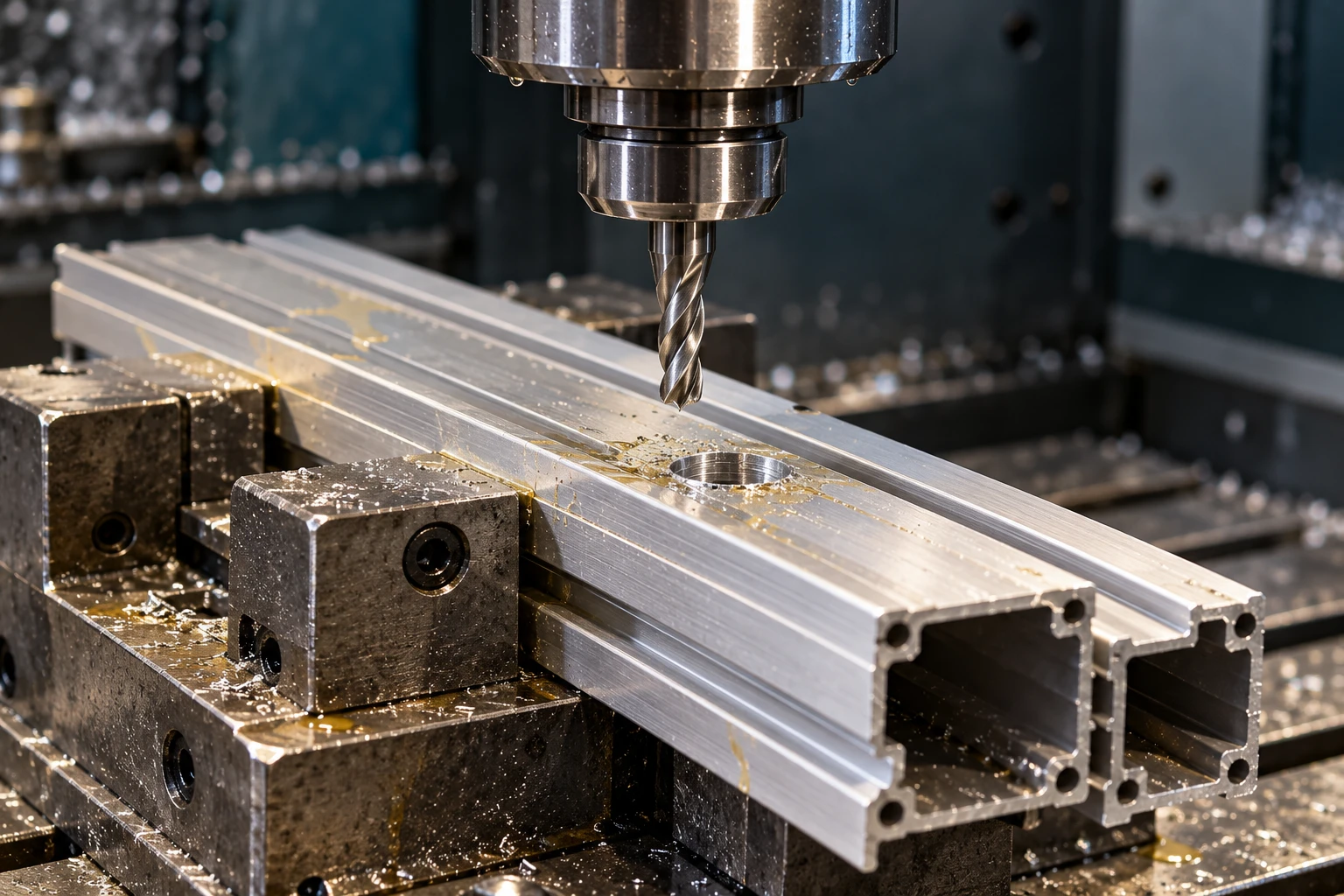
Define each feature in the finished-part context
Original purchasing guidance · not measured product data.
| Feature or operation | Drawing inputs | Inspection question |
|---|---|---|
| Cut end | Length, datum and end condition | Does the end locate another operation or the assembly? |
| Hole pattern | Locations relative to unambiguous datums | Which relationships determine fit? |
| Threads | Complete thread callout, access and depth requirement | What verification method and finished condition apply? |
| Pocket or slot | Model plus controlled drawing and critical interfaces | Which surfaces are machined and which remain as extruded? |
| Edge and surface | Burr removal, visible faces and finishing sequence | What must be accepted after the final operation? |
On small screens, scroll horizontally to compare all columns.
Distinguish section dimensions from machined features
Show hole patterns, pockets, slots and threads on the part drawing. Identify whether dimensions reference the extrusion end, a machined face or an assembly datum. Unclear datum selection can leave the supplier and buyer inspecting different relationships.
Agree the process and finish sequence
Discuss which features are machined before surface treatment, which areas need masking and whether any work follows finishing. Record how the accepted sequence affects visible faces, threads and critical fits. Do not assume a machining operation will automatically be available or meet a generic precision claim.
Make inspection practical
Identify the dimensions that will be inspected and ask how the supplier will measure them. Include edge condition, burr requirements and any surface acceptance criteria that affect use. A CNC machine description is not evidence that a particular finished dimension has been achieved.
Separate piece price from the complete operation scope
List cut-to-length work, holes, threads, pockets, deburring, finish and inspection separately when comparing offers. Ask which operations and documents are included in each price. An offer for the extruded length and an offer for a ready-to-assemble component are different purchase scopes, even when they start from the same section.
Background: AEC — Fabrication. The purchasing steps are original guidance.
ILLUSTRATIVE SCENARIO / NOT A CUSTOMER CASE
A hole pattern located from a finished end
Illustrative machining-review scenario: a hole pattern assembles against an end plate. Define whether the locating end is cut only or subsequently machined, then locate the pattern from the agreed datum. If finishing follows machining, identify thread and fit requirements in the delivered condition. Inspect the released relationships rather than separately checking unconnected dimensions.
Common purchasing mistakes
- Providing only a 3D model when acceptance dimensions and datums remain unclear.
- Treating a CNC machine description as evidence of achieved part accuracy.
Questions to resolve before a quotation
Does extrusion remove the need for machining?
That depends on the finished features and acceptance requirements. Identify the constant section separately from holes, threads, pockets and end work for a process review.
How should I agree an acceptable machining tolerance?
Identify the fit-driving dimensions and datums on the finished-part drawing. Agree which requirements apply after finishing and how they will be measured. A machine specification is not evidence of achieved part accuracy.
APPLY THE QUESTION TO A REAL SOURCE REFERENCE
Look beyond the product title.
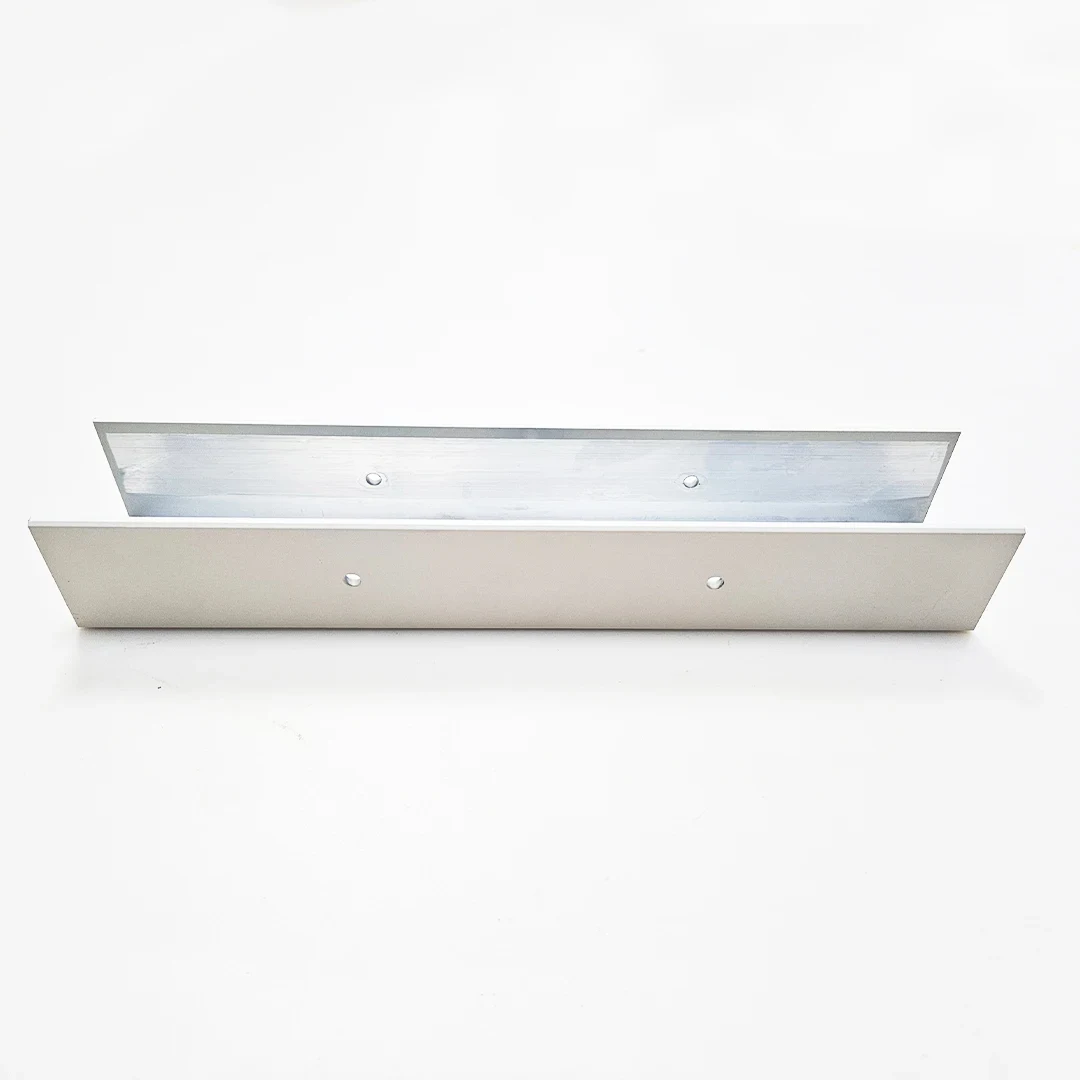
Machined U-channel sections
The supplier title includes CNC and cutting terms. Hole locations, internal clearance and the accepted finished condition must still be defined for an order.
The product page separates reference terms from missing specifications and provides part-specific buying questions.
Ask about this reference's technical dataSources and evidence boundaries
The industry reference notes support the technical background. The decision table, example and purchasing checklists are original guidance. They do not report supplier tests or certify a product.
- AEC — Fabrication
Industry guidance · Reviewed overview · Overview reviewed
Link checked : publisher page accessible. This is not technical approval.
Describes secondary fabrication routes including cutting and machining. It does not verify this site's process availability or accuracy.
Source publication date: Not stated on the reviewed page.
- AEC — Key Design Considerations
Industry guidance · Reviewed overview · Overview reviewed
Link checked : publisher page accessible. This is not technical approval.
Design context includes material, shape and press considerations. Its generic limits are not adopted as this project's production capabilities.
Source publication date: Not stated on the reviewed page.
Numerical limits require the applicable primary document, units, material condition and test method. None are inferred from a source title or an inaccessible standards page.
Required before publication
- Locate holes and threads from unambiguous datums.
- Record the complete thread callout and inspection requirement.
- Confirm machining and finishing order.
- Review the first article against the released revision.
- Complete an independent technical review of the applicable editions and scope, and obtain owner approval.
- For any future numerical data, record units, test method, material condition, source date and evidence category.
Use this draft to organize questions. An accepted drawing, quotation and applicable material or inspection documents must define the supplied part.
This is editorial purchasing guidance; independent technical approval is pending. The editorial revision date above records content changes. Source access dates are listed separately and do not imply a new technical review.
Quote the finished component, not just the extrusion.
Send the model and controlled drawing with datum faces, hole and thread details, cut lengths and finishing sequence. Flag any open inspection questions.
Before an order, review the quantity, sampling and delivery steps and the inspection-document requirements.
Review a fabricated part